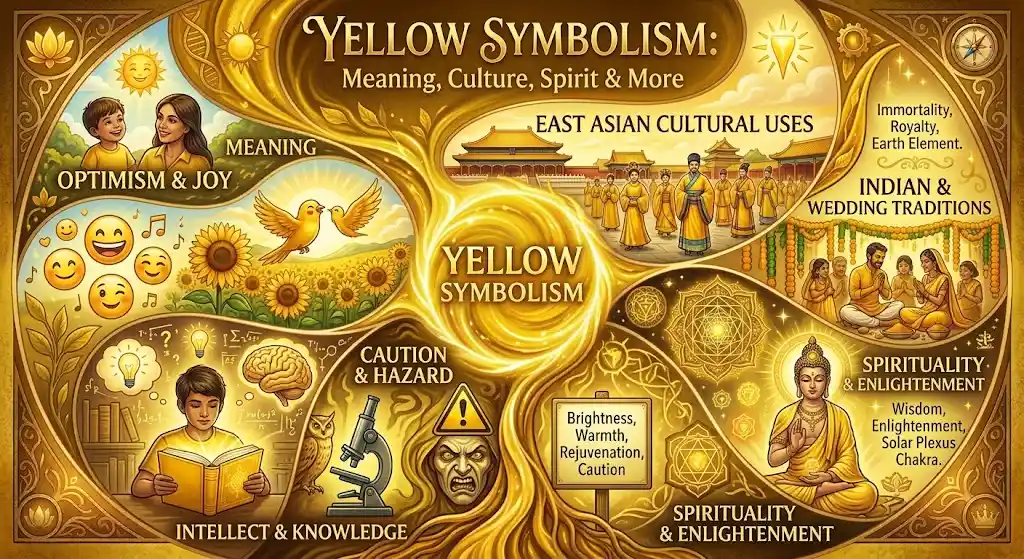
Yellow symbolism can represent happiness, optimism, warmth, energy, creativity, friendship, and awareness. Yet yellow can also suggest caution, jealousy, uncertainty, or betrayal in certain contexts.
The meaning of yellow depends on more than the color itself. Its shade, cultural setting, object, history, and emotional context can all change its message.
What Does Yellow Symbolize?
Yellow commonly symbolizes sunlight, happiness, warmth, optimism, energy, and attention. These associations often come from familiar experiences with sunshine, flowers, daylight, and bright natural landscapes.
Yellow can also carry more serious meanings. It may represent caution, jealousy, cowardice, uncertainty, or illness in particular cultural or historical contexts. That contrast makes yellow one of the more flexible colors in symbolism.
A yellow flower, warning sign, religious object, and dream image can each communicate something different. The surrounding context helps determine which interpretation makes the most sense.
For a quick interpretation, think of yellow as a color connected with light and visibility. It can brighten a scene, attract attention, or signal that something deserves notice.
The Main Positive Meanings of Yellow
Yellow has many positive associations in everyday life. Its connection with sunlight makes it a natural symbol of joy, hope, warmth, and optimism.
Yellow flowers can create a cheerful impression, while yellow clothing can appear energetic and confident. In design, bright yellow can make an element stand out quickly.
Common positive meanings of yellow include:
- Happiness: Yellow often creates a cheerful visual impression.
- Optimism: It can suggest hope and positive expectations.
- Warmth: Yellow naturally connects with sunlight and warmth.
- Friendship: Yellow flowers commonly represent friendly affection.
- Creativity: Bright yellow can suggest imagination and fresh ideas.
- Energy: Strong yellow often feels active and lively.
- Confidence: Yellow can make a bold visual statement.
- Clarity: Its connection with light can suggest visibility and awareness.
- Youthfulness: Bright yellow often appears in playful settings.
- Hope: Light-filled yellow imagery can suggest renewal.
These meanings are common associations rather than universal rules. A person’s culture and personal experiences can change how yellow feels.
The Negative Meanings of Yellow
Yellow also has darker symbolic associations. These meanings appear in language, historical traditions, art, folklore, and specific cultural settings.
Common negative associations include jealousy, cowardice, betrayal, caution, anxiety, and illness.
Some associations developed from historical traditions rather than from the physical properties of yellow. English expressions, for example, have connected yellow with cowardice. European artistic traditions have also used yellow in negative contexts at different points in history.
The shade can influence the impression as well.
A soft pastel yellow may feel gentle and welcoming. A dull yellow can sometimes suggest age, sickness, or discomfort. A very bright neon yellow may feel intense or demanding.
This is why yellow should not automatically be labeled either positive or negative. The setting determines the message.
Yellow Symbolism in Different Cultures
Yellow does not have one universal meaning around the world. Its symbolism changes across cultures, religions, historical periods, and social traditions.
In China, yellow has held important historical associations with imperial authority and the emperor. It has also been connected with the earth element within traditional Chinese systems.
In India, yellow can appear in religious, ceremonial, and cultural settings. It may be associated with knowledge, learning, spirituality, and auspicious occasions.
In Japan, yellow has developed several historical associations, including courage and wealth, although meanings vary by context and period.
Western symbolism is particularly mixed. Yellow can represent sunlight, happiness, and optimism, but it can also carry associations with jealousy, cowardice, betrayal, or caution.
Buddhist traditions provide another example of context-dependent meaning. Yellow and saffron-colored robes can be connected with religious life and renunciation.
The key lesson is simple: never assume that one culture’s meaning applies everywhere.
When interpreting yellow in a cultural setting, consider the specific tradition, historical period, object, and purpose.
Spiritual Meaning of Yellow
The spiritual meaning of yellow often centers on light, clarity, awareness, confidence, wisdom, and inner energy.
Some spiritual traditions connect yellow with enlightenment, knowledge, or sacred illumination. In other systems, yellow may be connected with personal power, confidence, or emotional balance.
Modern spiritual practices sometimes associate yellow with the solar plexus chakra. Within those traditions, yellow may represent confidence, willpower, personal identity, and self-expression.
These interpretations belong to particular spiritual systems. They should not be presented as universal scientific facts.
If you encounter yellow during a spiritual practice, consider the tradition you are following. Then look at the surrounding symbols and your personal response.
For one person, yellow may feel like a symbol of hope. For another, it may represent confidence, learning, or a new beginning.
Yellow Symbolism in the Bible
Biblical color symbolism requires careful interpretation because modern color charts sometimes attribute meanings that are not directly stated in Scripture.
Yellow itself does not have one universal biblical definition. However, gold, light, fire, and precious materials have important roles in biblical imagery.
Later Christian traditions and religious art developed additional color associations. These interpretations can be meaningful within specific traditions, but they should not automatically be treated as direct biblical teaching.
For this reason, a careful approach is to examine the specific passage, object, historical setting, and religious tradition.
If a yellow or golden object appears in a biblical discussion, ask whether the symbolism comes directly from Scripture or from later interpretation.
That distinction makes the interpretation more accurate and respectful.
Yellow in Dreams and Personal Symbolism
Yellow can feel especially meaningful in dreams because color often contributes to a dream’s emotional atmosphere.
A bright yellow flower might remind someone of happiness or friendship. A yellow warning sign might suggest awareness or caution. A dark or unpleasant yellow object could create completely different feelings.
There is no single universal dream definition for yellow.
Instead, consider:
- What was yellow?
- Was the shade bright, pale, golden, or dull?
- How did you feel when you saw it?
- What happened around the yellow object?
- Does yellow have a personal meaning for you?
- Does your cultural background affect the interpretation?
A yellow object connected with a happy memory may have a very different personal meaning from the same object in a frightening dream.
Dream symbolism is interpretive. It should not be treated as a reliable method for predicting future events.
What Yellow Means in Love and Friendship
Yellow often carries a strong connection with friendship, companionship, warmth, happiness, and affection.
Yellow flowers are frequently used to express friendship and cheerful affection. In modern digital communication, a yellow heart can also communicate friendly warmth rather than strictly romantic love.
Yellow can still have a place in romantic relationships. Couples may use it to represent happiness, playfulness, shared memories, optimism, or emotional warmth.
The meaning depends on the situation.
A yellow rose may communicate something different from a yellow dress, yellow heart, or yellow wedding decoration. The other symbols help establish the intended message.
If someone gives you a yellow object, consider the relationship and circumstances before assigning a fixed meaning.
Yellow Flowers and Nature Symbolism
Nature provides some of the strongest positive associations for yellow.
Sunflowers naturally connect yellow with sunlight, warmth, vitality, and optimism. Their large, bright blooms make them powerful visual symbols of cheerfulness.
Daffodils can evoke spring, renewal, and new beginnings. Their appearance after winter strengthens their connection with seasonal change.
Yellow roses are commonly associated with friendship, happiness, warmth, and affectionate connection.
Other yellow flowers can carry different meanings depending on local traditions and cultural customs.
Yellow flowers may therefore symbolize:
- Friendship
- Happiness
- Encouragement
- Warmth
- Celebration
- Renewal
- Hope
- Affection
- Sunshine
- Positive energy
However, flower symbolism is not universal. The flower species, culture, historical tradition, and personal relationship all matter.
Yellow Psychology and Emotional Associations
Yellow is often described as a cheerful, energetic, noticeable, and stimulating color.
Its connection with sunlight may help explain why people commonly associate it with happiness and optimism. Its strong visibility also explains why it appears frequently in warning systems and attention-focused designs.
However, it is too broad to claim that yellow automatically makes everyone happy or intelligent.
Color responses can vary according to culture, personal experience, brightness, surrounding colors, and context.
For example, a small amount of warm yellow may create a welcoming impression. A large amount of extremely bright yellow may feel overwhelming to some people.
This is especially important when using yellow in interior design, clothing, websites, packaging, or artwork.
The best interpretation considers the entire visual environment rather than the color alone.
Yellow Shades and Their Symbolic Differences
Not every yellow creates the same symbolic impression.
Pale yellow often feels soft, gentle, fresh, and delicate. It can work well when a design needs warmth without strong visual intensity.
Lemon yellow tends to feel bright, youthful, energetic, and playful. Its high brightness can attract attention quickly.
Golden yellow sits closer to gold and can suggest achievement, value, wealth, warmth, and prestige.
Mustard yellow has a deeper, earthier appearance. It can create associations with maturity, vintage design, autumn, and confidence.
Sunflower yellow strongly connects with nature, sunshine, happiness, and vitality.
Neon yellow is highly noticeable. It can suggest urgency, visibility, modern energy, or caution.
Dull yellow may feel less cheerful. Depending on the setting, it can suggest aging, discomfort, sickness, or neglect.
Yellow-green can appear fresh and natural, but certain shades may also create associations with jealousy or illness.
These are symbolic tendencies rather than fixed definitions. Lighting, saturation, surrounding colors, and cultural expectations all affect the final impression.
Yellow in Art, Literature, and Design
Artists and designers use yellow to create light, contrast, warmth, energy, and emotional emphasis.
In paintings, yellow can represent sunlight or draw attention toward a particular subject. In literature, it can symbolize happiness in one scene and unease in another.
Historical European traditions demonstrate how flexible yellow can be. Yellow has been associated with gold, light, and wealth while also acquiring negative associations in certain historical contexts.
Modern designers often choose yellow when they want something to feel:
- Friendly
- Energetic
- Youthful
- Cheerful
- Visible
- Bold
- Warm
- Attention-grabbing
Yellow also works well as a contrast color. Against darker backgrounds, it can become highly noticeable.
That makes it useful for signs, packaging, advertisements, interfaces, illustrations, and visual branding.
Yellow in Everyday American Life
In the United States, yellow has an especially strong association with attention and caution.
School buses provide a familiar example. Yellow also appears on warning signs, road markings, construction equipment, caution tape, and safety clothing.
In these situations, yellow does not necessarily mean immediate danger. Instead, it often communicates:
Pay attention. Something requires awareness.
This is different from the stronger stop-and-danger association commonly connected with red.
Yellow also appears in positive American imagery. Sunflowers, smiley faces, children’s products, summer decorations, sports designs, and cheerful packaging frequently use the color.
This creates an interesting contrast.
Yellow can tell you to slow down and notice something, while also making an environment feel bright and cheerful.
Yellow vs. Gold: What Is the Difference?
Yellow and gold are visually related, but their symbolic meanings are not identical.
Yellow commonly represents:
- Happiness
- Sunshine
- Warmth
- Friendship
- Energy
- Optimism
- Attention
Gold more often represents:
- Wealth
- Achievement
- Prestige
- Luxury
- Value
- Status
- Sacred importance
The two colors overlap because gold can have a rich yellow appearance.
However, context separates them.
A bright yellow road sign communicates caution, not luxury. A golden trophy communicates achievement rather than simple cheerfulness.
A yellow flower may symbolize friendship. A gold-colored religious object may communicate sacred value or reverence.
Understanding this distinction helps prevent overly broad interpretations.
How to Interpret Yellow Symbolism Responsibly
A useful interpretation begins with context rather than a fixed dictionary definition.
Use these steps when studying yellow symbolism:
- Identify the object: Determine what is actually yellow.
- Examine the shade: Pale, golden, mustard, and neon yellow differ.
- Consider the setting: Religion, dreams, nature, design, and safety use yellow differently.
- Check cultural context: A symbol can change meaning across cultures.
- Notice your emotional response: Personal feelings can add important context.
- Look at surrounding symbols: Other colors and objects can change the message.
- Check the historical period: Older meanings may differ from modern meanings.
- Separate belief from evidence: Spiritual interpretations belong to particular traditions.
- Avoid fixed predictions: Symbolism does not guarantee future events.
- Use several clues: One color rarely explains an entire symbolic scene.
This approach is more useful than memorizing a single meaning.
Common Questions and Mistakes About Yellow Symbolism
One common mistake is assuming that yellow always means happiness.
Happiness is an important association, but yellow can also represent caution, jealousy, uncertainty, or other ideas.
Another mistake is assuming that spiritual symbolism works the same way across every tradition. It does not.
A third mistake is confusing yellow with gold. Their meanings overlap, but they often communicate different ideas.
It is also easy to overlook cultural context. Yellow can represent authority in one historical tradition and caution in another.
Is Yellow a Positive or Negative Color?
Yellow can represent both positive and negative ideas. Happiness, optimism, and warmth are common positive associations, while caution, jealousy, and cowardice appear in specific contexts.
What Does Yellow Symbolize Spiritually?
Yellow can represent light, clarity, wisdom, confidence, or enlightenment within certain spiritual traditions. The exact meaning depends on the belief system.
What Does Yellow Mean in Love?
Yellow commonly represents friendship, warmth, companionship, happiness, and affectionate connection. Its meaning can become more romantic when combined with other relationship symbols.
What Does Yellow Mean in Dreams?
Yellow in dreams may suggest happiness, attention, confidence, caution, or emotional awareness. The object, shade, setting, and personal feelings are important.
Why Does Yellow Symbolize Caution?
Yellow is highly visible and can quickly attract attention. This makes it useful for warning systems where people need to notice something and respond carefully.
Does Yellow Have the Same Meaning Worldwide?
No. Yellow symbolism varies by culture, history, religion, language, and context. Its meaning in China, India, Japan, Western societies, and religious traditions can differ.
What Do Yellow Flowers Symbolize?
Yellow flowers commonly suggest friendship, happiness, warmth, encouragement, and renewal. The exact meaning depends on the flower and cultural tradition.
Conclusion
Yellow symbolism is powerful because yellow can communicate several different ideas at once. It can represent sunlight, happiness, friendship, creativity, confidence, awareness, caution, or cultural meaning.
The most useful interpretation considers the shade, object, setting, culture, history, and emotional context. Instead of asking only what yellow means, ask what the yellow object is doing within its particular setting.
That approach creates a more balanced understanding of symbolism. When you encounter yellow in a dream, artwork, flower, spiritual tradition, design, or everyday object, start with context before choosing a meaning.